
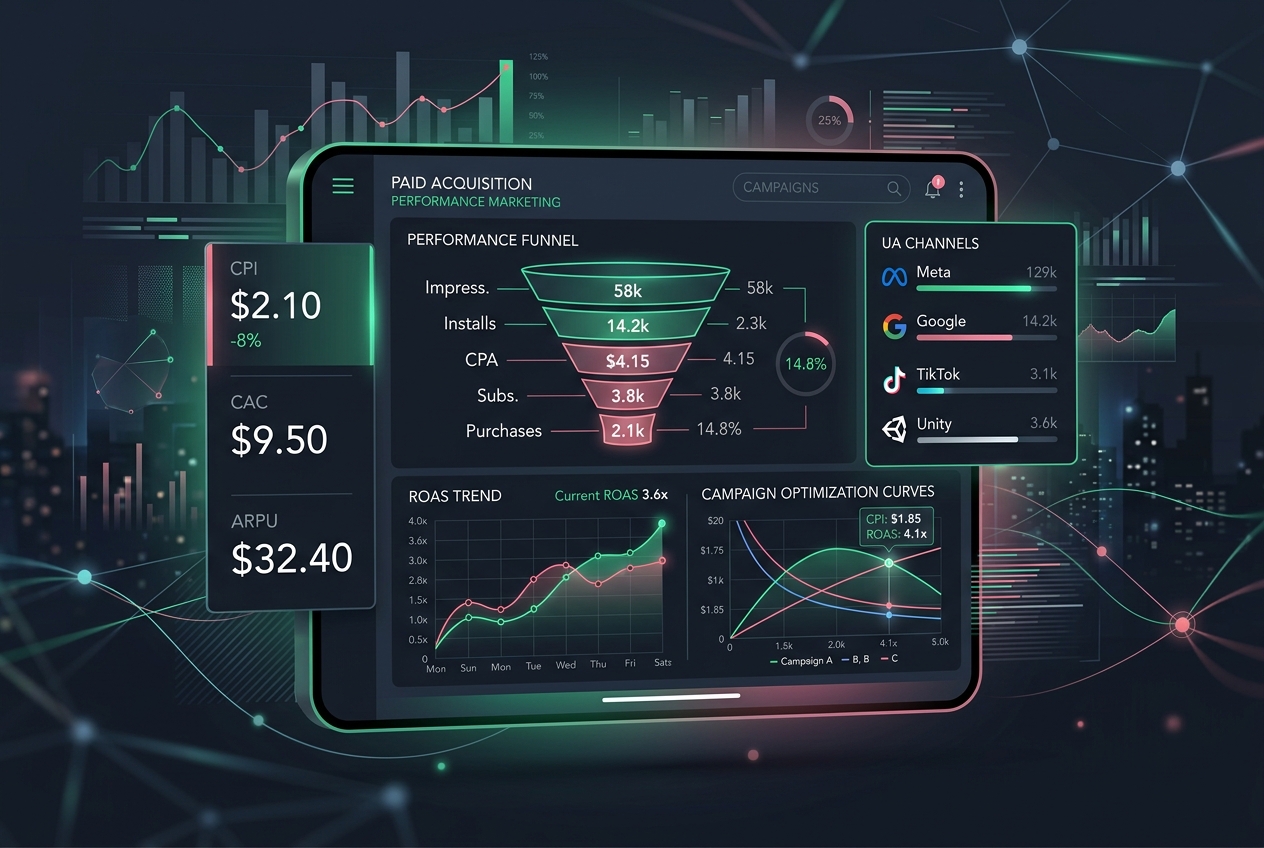
A web-to-app funnel is a chain of handoffs. Map each handoff from the original promise to the first useful app action before spending more on acquisition. The biggest loss may sit between systems rather than within an individual page.
Draw the actual path
Include the ad, landing page, optional quiz, store visit, installation, sign-in and activation. Add separate paths for people who already have the app and people who move between devices. Record the owner of every step.
Do not assume a click on a store badge equals an install or that a completed web form equals an activated app user. Each event describes a different point in the journey.
Check continuity of meaning
The promise should survive the transition. If a landing page recommends a personalized plan, the app should explain how to access it. Asking someone to repeat all their answers can make the journey feel broken even when every link technically works.
Use real-device testing to uncover redirects, unexpected browser behavior and expired sessions. Read Android’s deep-link guidance when planning the relevant implementation.
Separate known data from blind spots
Document which transitions can be measured reliably and where privacy, platform or identity limits create uncertainty. Avoid filling every gap with a confident attribution claim.
For an illustrative funnel, landing-page completion may be strong while first-session activation remains weak. That suggests investigating the handoff and onboarding before optimizing the page headline again.
Prioritize the earliest broken promise
Fix a misleading message or broken destination before adding more traffic. Once the path is coherent, test individual steps with a defined hypothesis and guardrails.
The best funnel map is a working operational document. It names the expected behavior, the evidence and the responsible owner at each stage, making it easier to distinguish a marketing problem from a product or implementation problem.